Skip to content
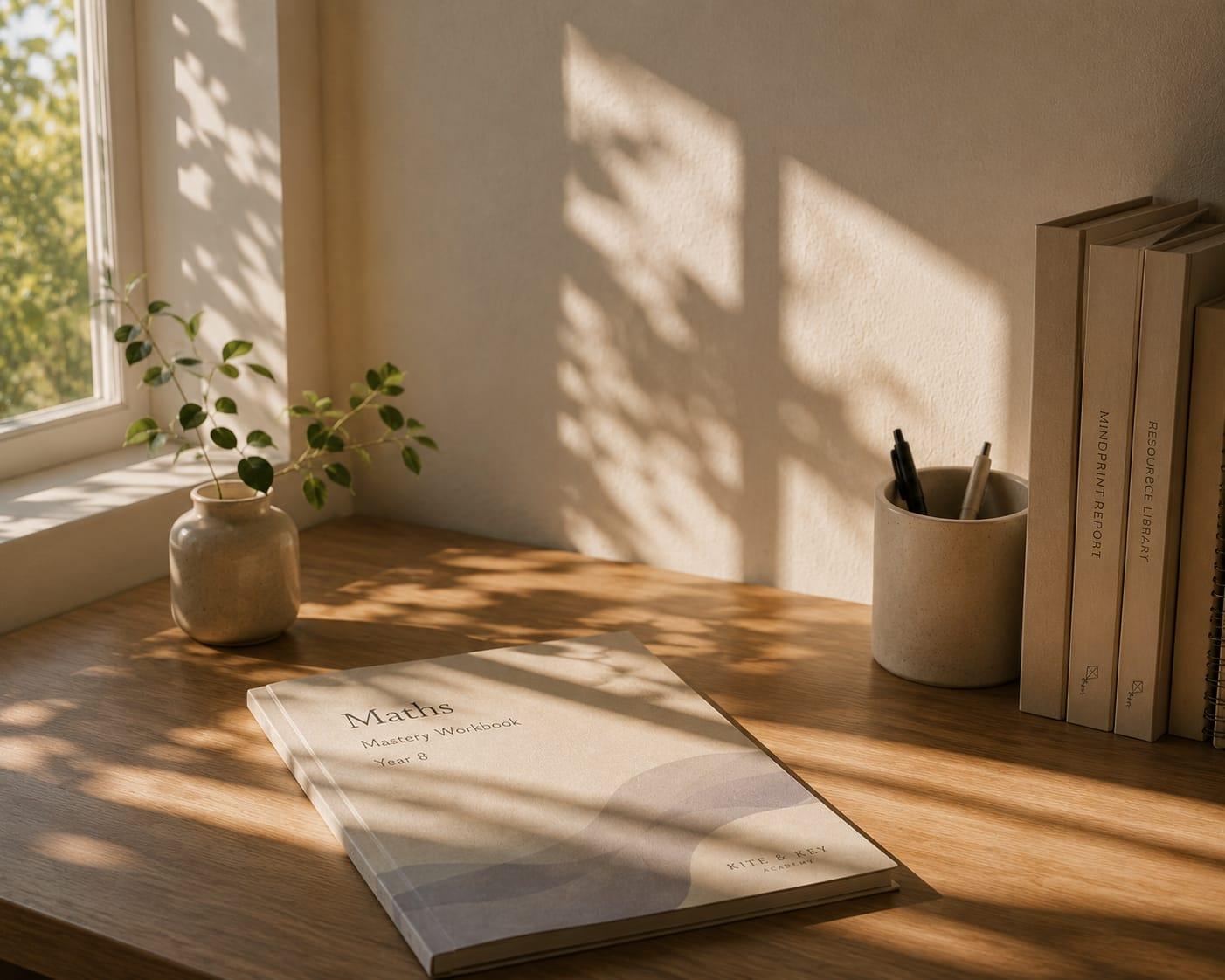
Over-shoulder of a Year 7–8 student at an oak desk by a window, morning light, pencil in hand — the moment before understanding arrives.

1:1 maths · Years 5–10 · Online

We find out how your child thinks. Then we teach them that way.

Book a free assessment

Scroll to begin ↓

How it works

Four of us share your child’s week. Each with one job.

  1. 01.

    MindPrint™

    Works out how your child thinks, then writes each lesson to fit.

  2. 02.

    Their tutor

    Teaches it live, one to one, and explains it a second way.

  3. 03.

    Your child

    Picks the times. We set the task for each one.

  4. 04.

    You

    A check-in after every lesson: covered, clicked, next.

A girl in school uniform pats the family dog on her way through the front door

Home from school · 3:40 pm

A child’s hand holding a pencil over a page of maths working

The line they keep coming back to

A mug and an open exercise book on a soft blanket by a window

01 / 08Sound familiar?

Every child gets stuck somewhere different.

Six things parents tell us. Each needs a different lesson.
01“They study, and a week later it’s gone.”
Usually
Learned once, never revisited.
What we do
Short reviews, spaced through the week.
02“They get it in the lesson, not the test.”
Usually
Following isn’t the same as recalling.
What we do
Recall from memory, built into every week.
03“Fine at maths. Falls apart on word problems.”
Usually
Often the reading or the steps, not the maths.
What we do
Smaller steps, and a diagram first.
04“They knew it. They needed ten more seconds.”
Usually
Speed is being read as ability.
What we do
Accuracy first. Speed after.
05“Fine for twenty minutes, then gone.”
Usually
Stamina, not attitude.
What we do
Shorter blocks, hardest idea first.
06“I’ve explained it five times. Same mistake.”
Usually
One wrong idea underneath.
What we do
Name it, show why it fails, teach the way out.
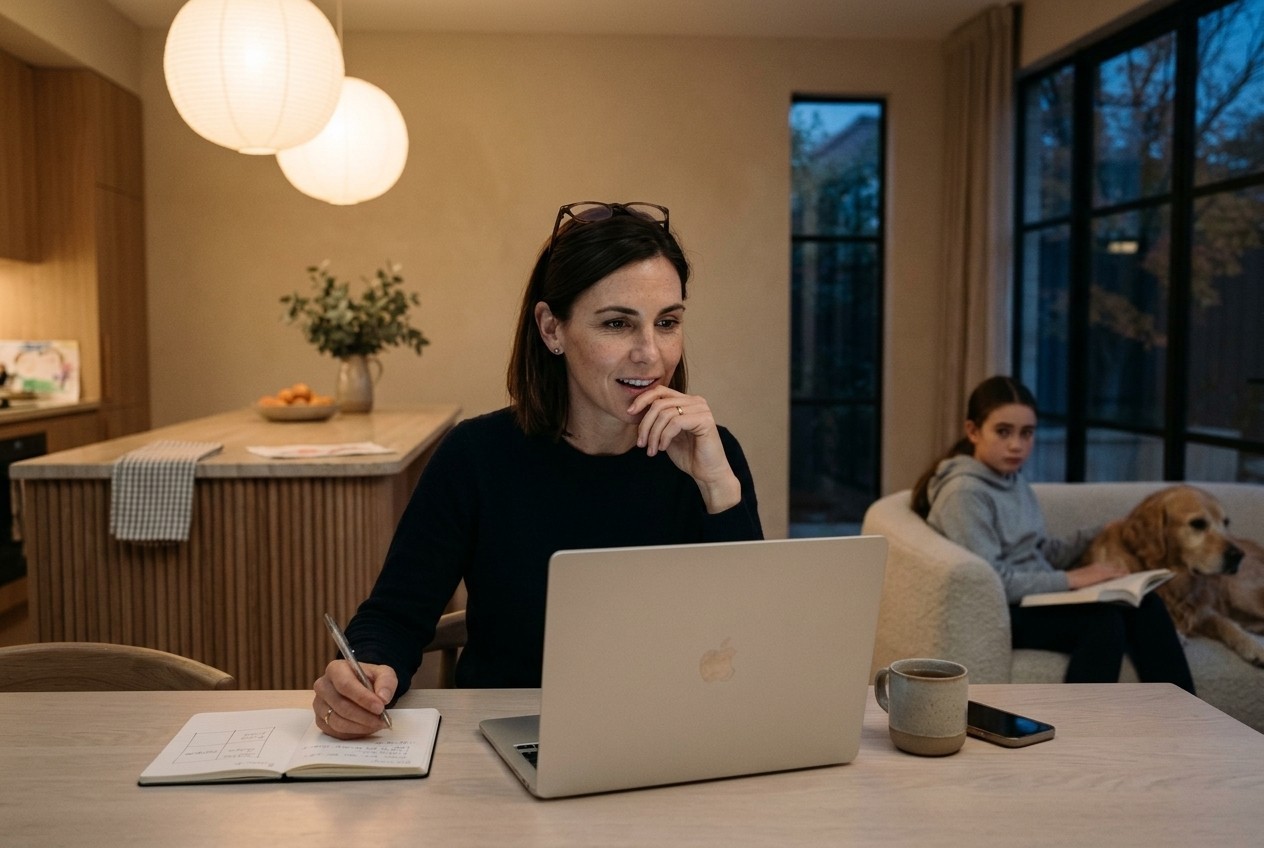
A mother on a video call at the dining table, her daughter on the sofa behind her

The free assessment · fifteen minutes about your child

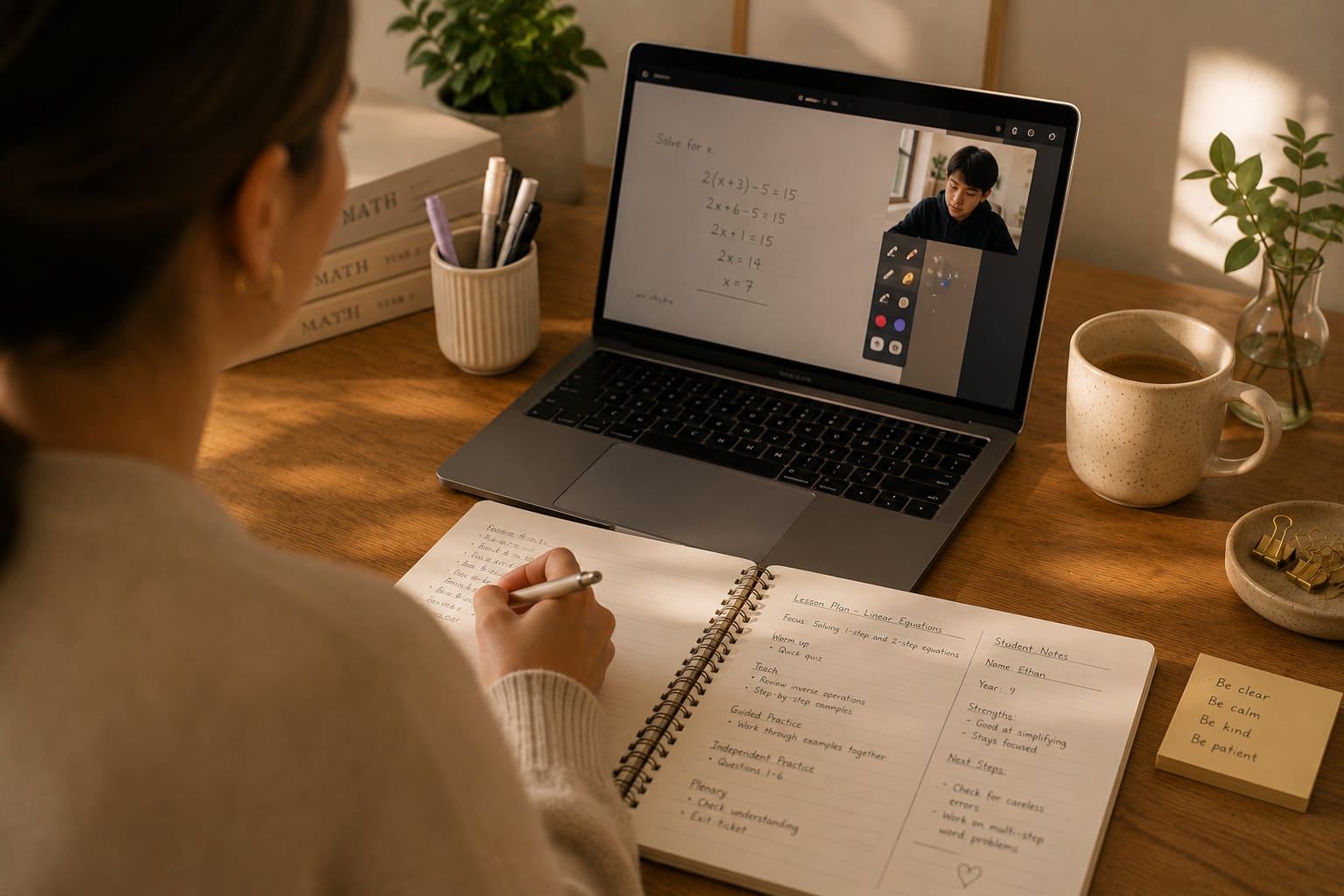
A student at a desk in an online lesson, laptop open beside a notebook

02 / 08How we teach

No two lessons are the same.

One topic, one standard, no template. MindPrint™ writes it; their tutor teaches it.
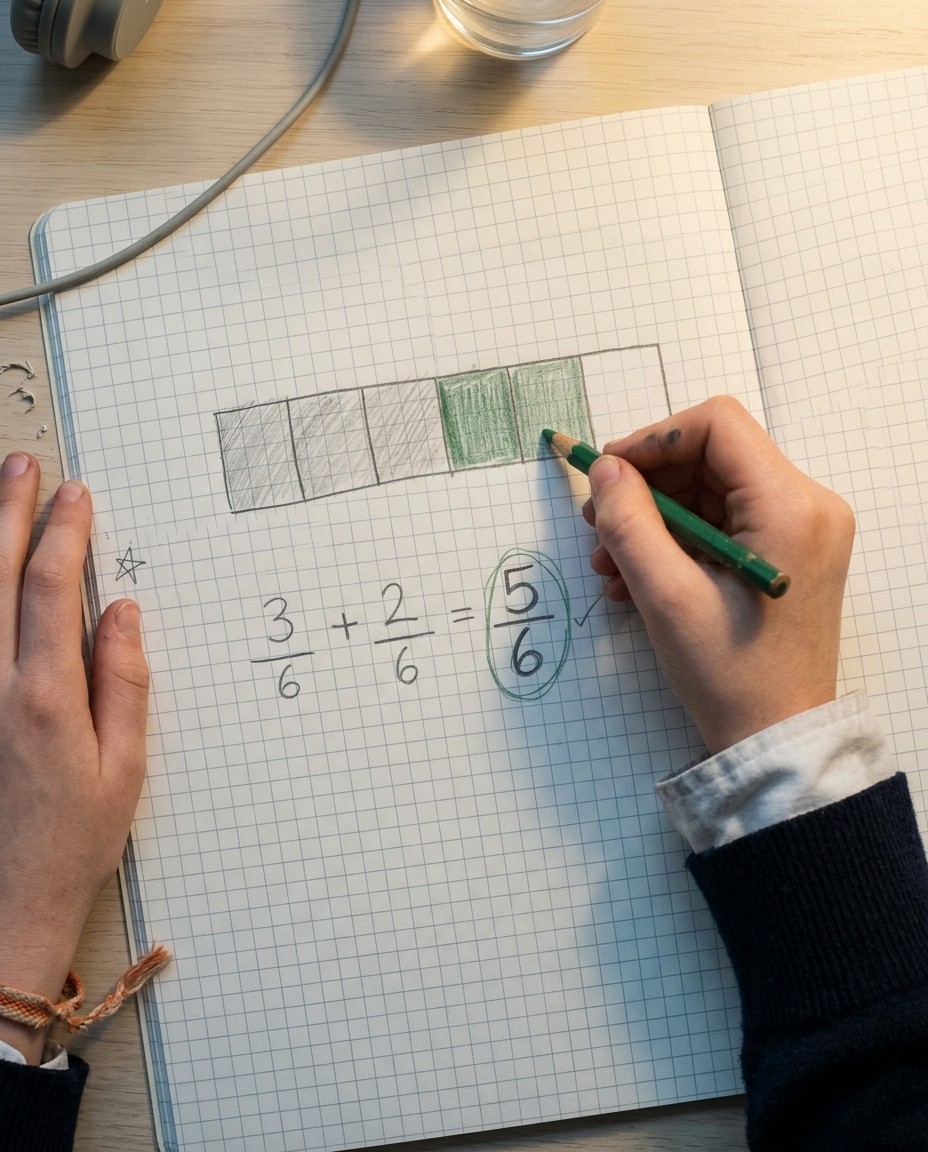
A child shades a fraction bar in green pencil beside 3/6 + 2/6 = 5/6

Written for one child

Same topic · three children · three lessons

  1. Child A

    Loses the thread on long problems

    Long problems split into parts, with the steps so far written alongside.

  2. Child B

    Right, but a beat behind the class

    One deep problem, untimed. Then they explain the method back.

  3. Child C

    Strong start, fades after twenty minutes

    The hardest idea first, short blocks, and a real break.

Illustrative children, not real students.

03 / 08What we teach

The mistake, taught on purpose.
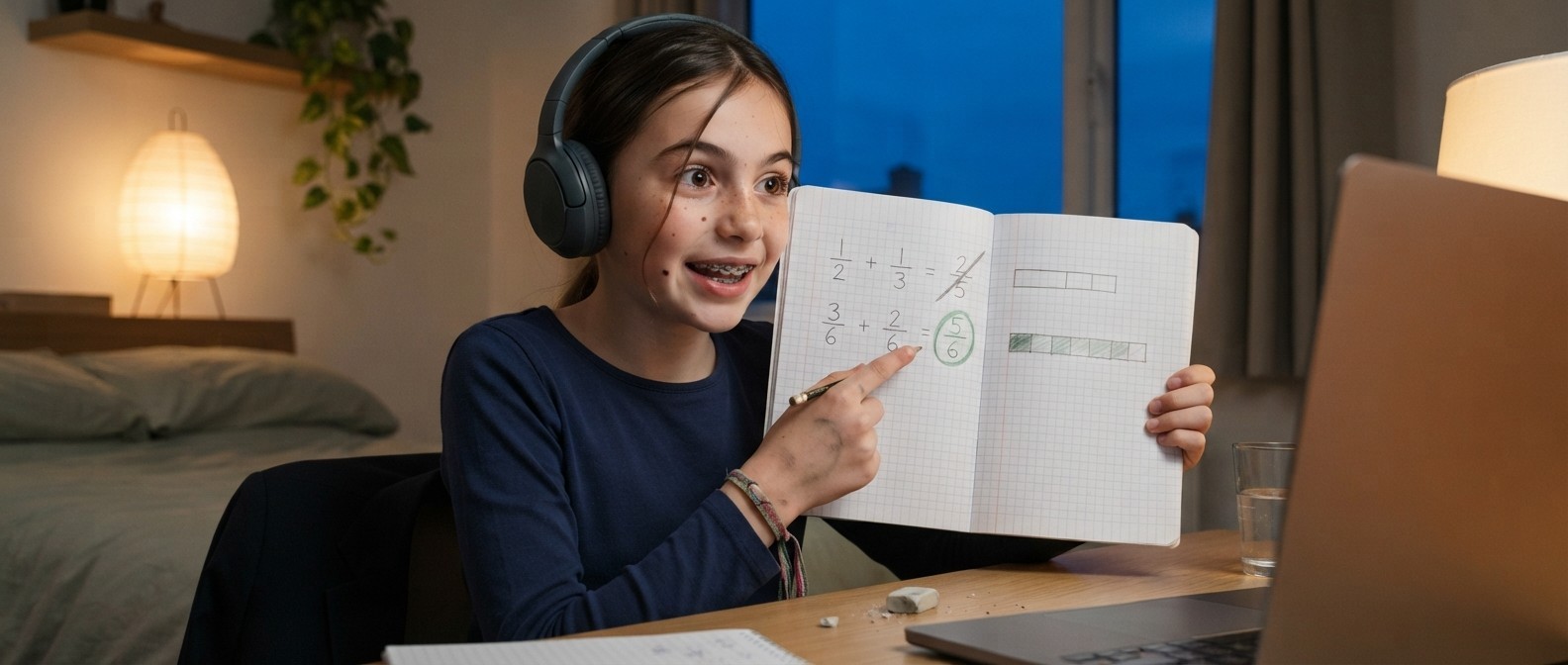
Not carelessness. A sensible rule, used in the wrong place.

The wrong idea

+ =

Add the tops. Add the bottoms. It looks right.

The rule

+ =

Same-size parts first. Then add.

  • Three more
  • Unlike terms stay apart.
  • A coin has no memory.
  • Same base: keep it, add the powers.
A girl in headphones holds her notebook up to the camera: 1/2 + 1/3 = 2/5 crossed out, 3/6 + 2/6 = 5/6 circled

She explains it back to her tutor

04 / 08Between lessons

The other six days aren’t left to chance.
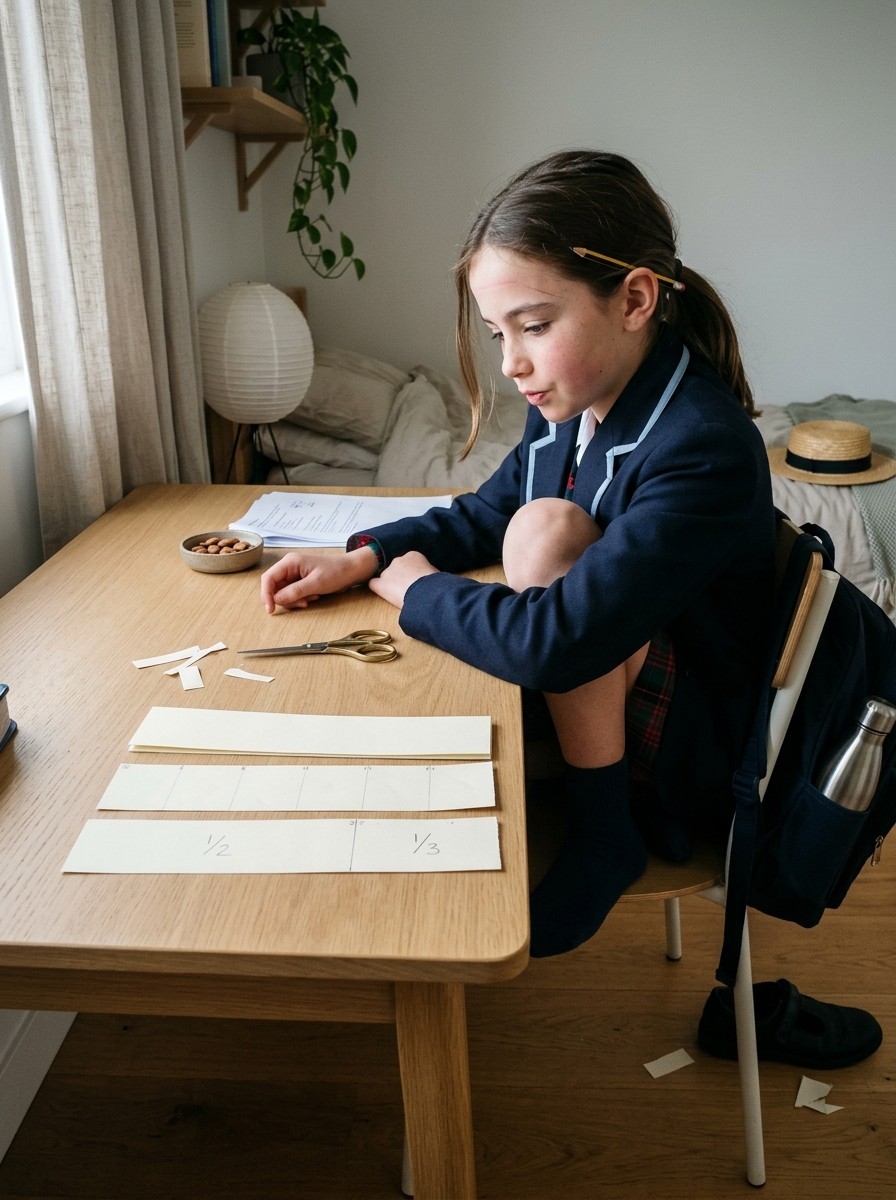
Your child picks the times. We set the task.

  • A girl at her desk lining up paper strips marked one half and one third

    Mon · 4:30 pm

    The mistake

    Last lesson’s, revisited.

  • A girl on the sofa with a tablet and the dog after dinner

    Wed · 7:00 pm

    Warm up

    Before tomorrow’s lesson.

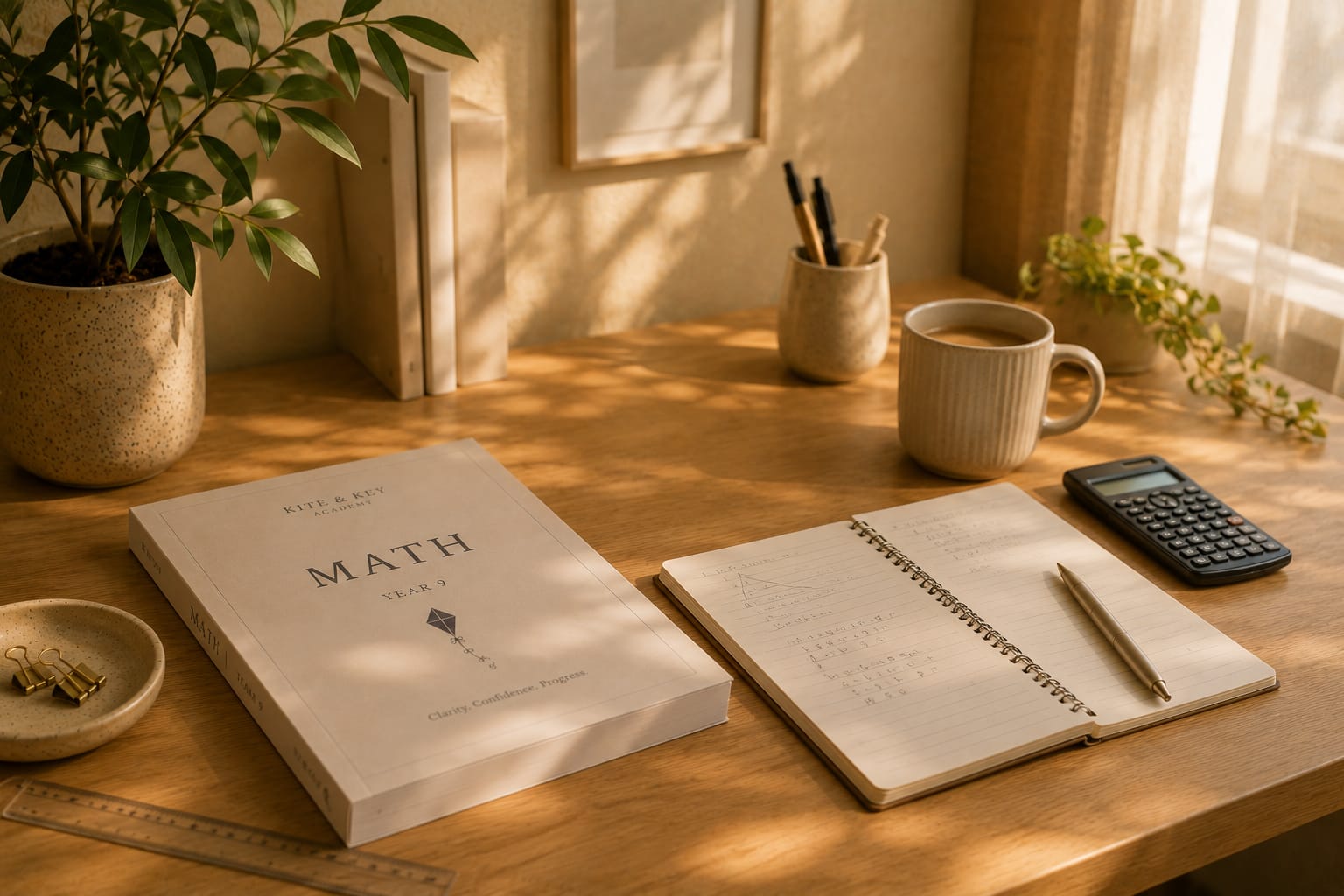
  • A desk with an open notebook, a calculator and a cup of tea

    Thu · 5:00 pm

    The lesson

    One to one, with their tutor.

  • Sat · 10:00 am

    Recall

    Thursday’s idea, from memory.

  • Sun · 3:00 pm

    Practice

    Most right, not all.

Tuesday and Friday: nothing booked.

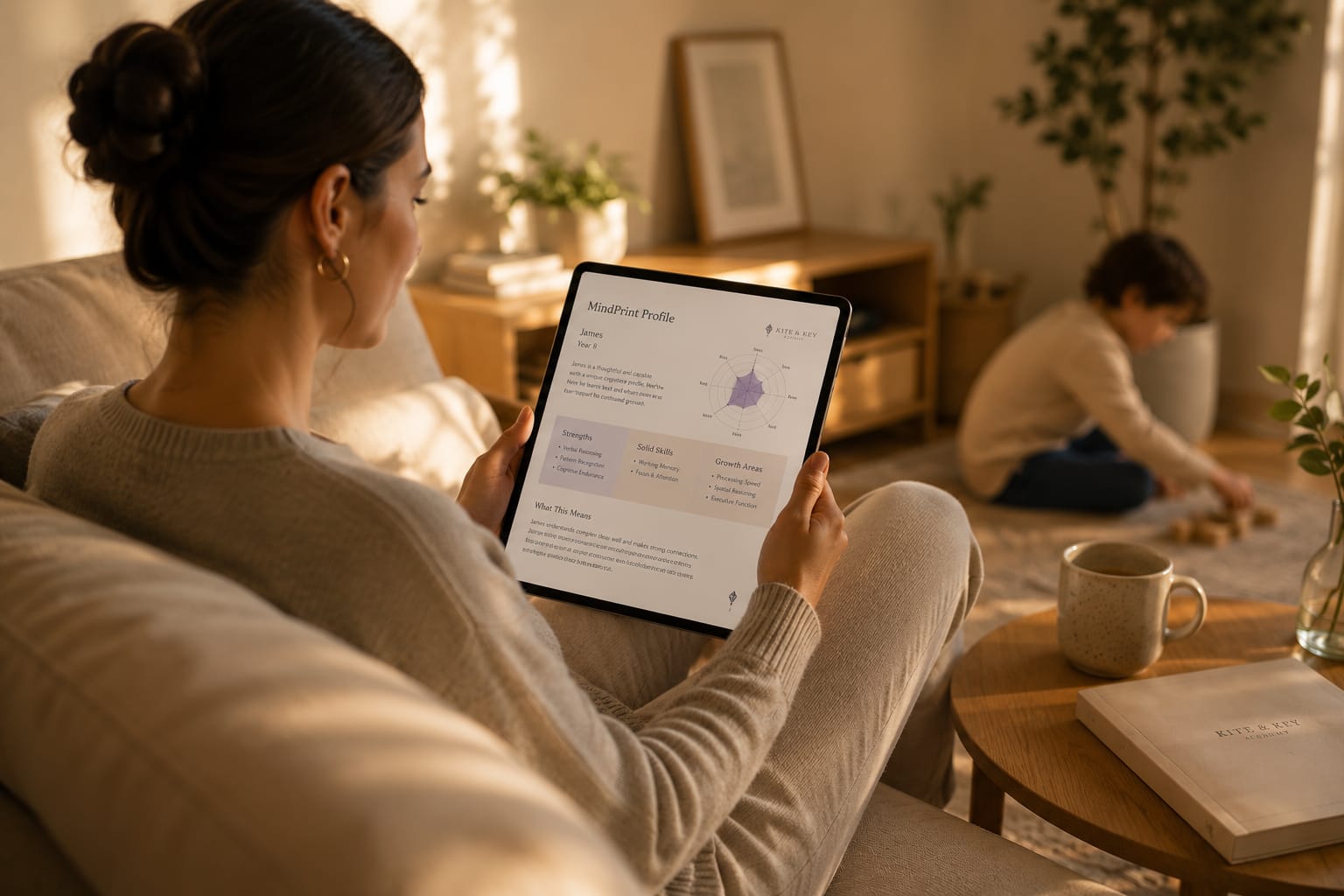
A parent reading the weekly check-in on a phone at the kitchen bench

05 / 08What you’ll see

You’ll know what each week was for.

The map
Every lesson tied to a place on it.
The check-in
What was covered, what clicked, what’s next.
The levels
Signed off one at a time.

06 / 08Choosing calmly

Three questions for any tutor. Including us.

Tutoring is unregulated. These help, whoever you choose.

  1. i.

    What exactly will you measure?

    You should see specific skills, not adjectives.

  2. ii.

    What happens on the other six days?

    One hour is about 1% of a child’s waking week.

  3. iii.

    What can you not do?

    A provider who can’t name a limit hasn’t thought about one.

What we won’t promise

A guaranteed mark
We don’t control sleep, school or the exam.
A “learning style”
Tested, and it doesn’t hold up.
A higher IQ
Tutoring builds knowledge, not intelligence.
Lessons you don’t need
Sometimes it’s a routine, not a tutor.

07 / 08Why you can believe it

Built on findings that keep being found.

The methods tested most often, in real classrooms. Not invented by us.

222classroom studies

Recalling beats rereading

Yang et al. 2021 · 48,478 students

22classroom studies

Spaced practice lasts longer

Mawson & Kang 2025

55studies in maths

Worked examples first

Barbieri et al. 2023

Findings about the methods, from other researchers’ students. Not results of ours.

08 / 08Who teaches

People who can explain it a second way.

  • Lucia Han

    ATAR 97.15

    Lucia Han

    Balance-focused learning approach

  • Philo Daoud

    ATAR 99+

    Philo Daoud

    1st in NSW for Maths Extension 1

  • Gihan Wijemanne

    ATAR 99.00

    Gihan Wijemanne

    HSC All-Rounder (90+ every subject)

  • Rachel Iie

    ATAR 97.95

    Rachel Iie

    Personalised lesson formatting

  • Flynn Gowing

    ATAR 95.05

    Flynn Gowing

    Deep understanding focus

  • Duvindu Liyanage

    ATAR 95.85

    Duvindu Liyanage

    Confidence-building focus

  • Ghashika Ramesh

    ATAR 95.00

    Ghashika Ramesh

    Creative & balanced approach

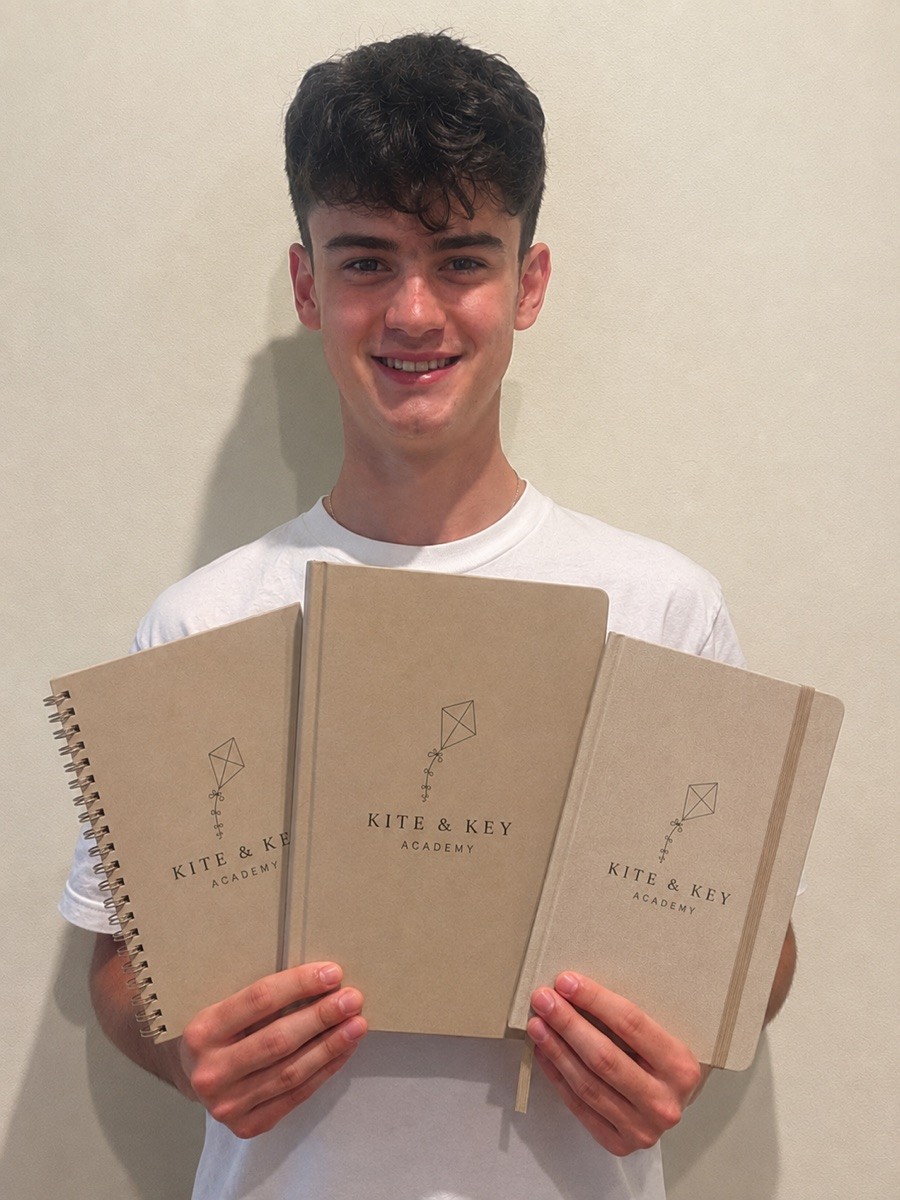
Joshua, one of our students, smiling and holding three Kite & Key Academy notebooks

Joshua, one of our students, with his Kite & Key notebooks

Reviews for Keisha, our founder

Words we didn’t write.

From students and parents Keisha has taught.

5.04 reviews
  • Parmiss Parsi
    She explains things in a way that actually makes sense and always makes me feel comfortable asking questions.
  • Isaac Lee
    Keisha helped me iron out gaps in my understanding and always knew when to slow down or push forward.
  • Ashley Johnson
    She has made such a difference in my learning. I feel far more confident approaching difficult topics.
  • Trent & Emily
    Our standards were high when choosing a tutor and Keisha exceeded them in every way.

Before you decide

The questions parents ask first.

01How much does it cost?

It depends on the hours a week you choose. Billed monthly, no lock-in, siblings 10% off. Every plan is on the pricing page.

02Am I locked in?

No. Monthly membership, and you can join in any week.

03What if we miss a lesson?

Reschedule with 24 hours’ notice. Without notice it can’t be moved, but we’re understanding about real emergencies.

04Is placement a test?

No. A working session with their tutor, with no score to pass. It tells us where to begin.

05Is the free assessment a sales call?

No. Fifteen minutes about your child, and our honest view, whether or not you join.

06Can my child go beyond their year?

Yes. The map runs from Year 5 to Year 10. When a level is signed off, the next one opens.

07Why a human tutor, now there’s AI?

A chatbot answers the question your child asks. A tutor notices the one they didn’t ask, and teaches that.

A mug and an open exercise book on a soft blanket by a window

Start with an assessment, not a commitment.

Fifteen minutes about your child. Free, and no obligation.

Book a free assessment

Already decided? Enrol now. Monthly, no lock-in.